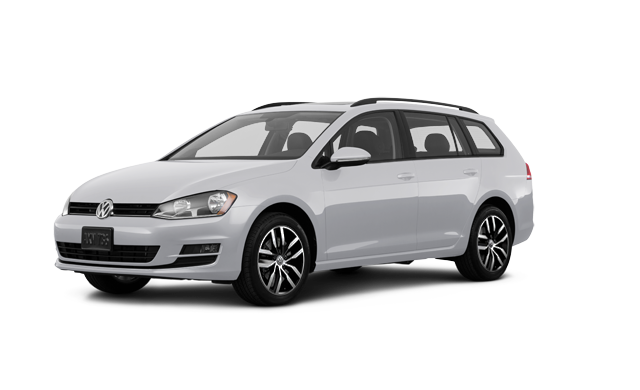
 Passengers in the again seat will be capable of stretch out a lot more in the Volkswagen Passat than the Audi A4, as a consequence of its higher head- and legroom. As far as headroom and legroom go, there's not a lot difference between the Audi A4 and the Volkswagen Passat within the front seats. With the Volkswagen Passat you will definitely be making much less frequent stops on the gasoline station than with the Audi A4, as a consequence of its tank size and gas economy. There are rather a lot of things to think about when calculating the overall price of a vehicle. The principle consideration is Manufacturer's Suggested Retail Price (MSRP). The Audi A4 will definitely make more of a dent in your wallet than the Volkswagen Passat, which has a a lot lower MSRP. Another consideration is the Destination Charge, which is an ordinary charge for transporting the car to the dealer from the place it is constructed.
The Destination Charge for the Audi A4 is much larger than that for the Volkswagen Passat. The Audi A4 is about the same width as the Volkswagen Passat. The Audi A4 is slightly shorter than the Volkswagen Passat, which may make it easier to park. With considerably increased torque, the engine of the Audi A4 transmits a bit more energy to the wheels than the Volkswagen Passat. The Audi A4 has a larger turning radius than the Volkswagen Passat, making it barely more difficult to maneuver in and out of tight spots. In terms of horsepower, the Audi A4 is somewhat extra powerful than the Volkswagen Passat. In terms of seating you will be ready to fit the same number of people in both the Audi A4 and the Volkswagen Passat. The Audi A4 has significantly much less cargo room than the Volkswagen Passat, which may be a priority when you do loads of warehouse buying.
“Data scientists and big knowledge specialists from our IT labs in San Francisco and Munich are testing the programming of functions and algorithms on D-Wave’s quantum laptop,” says Hofmann. “Our experts have already efficiently developed and examined a visitors circulation optimisation algorithm. Our strategic cooperation with D-Wave is very beneficial to us, as our current focus is on the further improvement of specialist experience and entrepreneurially significant applications,” he says. In simplified phrases, an optimisation downside considers how a selected resource - corresponding to time, money or energy - might be used in the absolute best means in a sure situation. The complexity of the duty, and due to this fact the computing capacity required exponential growth. Running optimisation algorithms when there are large numbers of variables can rapidly overpower conventional computers, pushing them past their limits. Conventional high-performance computers might be utilized to unravel such computationally complex problems, but, in response to Hofmann, they may take 30 to forty five minutes to provide results that a quantum pc can deliver in three seconds.
“HPCs are far too sluggish. Within 30 minutes, the traffic jam would have already formed,” he says. The computing precept of a quantum computer is particularly suited to this mission as a result of it natively solves optimisation issues such as visitors move. The IT consultants at Volkswagen Group were able to reveal site visitors optimisation operating on the D-Wave quantum pc, which paves the option to smart city optimisation. “They used the information of about 10,000 taxis in the mega-metropolis of Beijing for this goal,” says Hofmann. “We additionally learnt what knowledge is needed, and easy methods to construction algorithms to ultimately handle and optimise any transferring object in an urban setting. With autonomous vehicles below development we see this as necessary because the vehicle technology itself. “The quantum computer we are utilising from D-Wave is not a basic quantum laptop,” he says. “It has a slender field of utility.” The D-Wave machine is especially suited to optimisation algorithms. Artificial intelligence methods are sometimes utilized to recognise patterns and rules, and machine learning and deep learning primarily based on multi-layer neural networks are higher suited to sample recognition and prediction. “Combining the two computing concepts exploits each strengths. Pattern recognition and prediction on conventional excessive-performance machines transfers the results over to the quantum pc and offers sooner optimisation, earlier than transferring results back to the high-efficiency machines,” says Hofmann.
It’s not so easy to tell the difference between economic system and luxury car brands anymore. 70,000 Kia each for sale in 2018. Strange instances we’re dwelling in. Volkswagen, then again, seems to be stuck someplace within the middle. Traditionally a maker of not-quite-economic system vehicles and SUVs, they’ve fluctuated in the final decade between cheaping out on the U.S. Jetta and Passat and providing insane, expensive options like a 12-cylinder executive sedan with Bentley elements (the defunct Phaeton) and a twin-turbo diesel V10 luxury SUV (for now, the Touareg nonetheless exists; the diesel V10 doesn't). The first two had been relative successes despite their abandonment of VW’s core customer group, and the latter two have been spectacular sales flops despite their bravado and relative value for what you bought. So the place does that depart the legally-beleaguered model in 2018? Well, it’s nonetheless not fairly so clear, as evidenced by the all-new Arteon, Volkswagen’s substitute for the gorgeous but flawed CC. To seek out out if this Vee-Dub is worth buzzing about earlier than its U.S.
