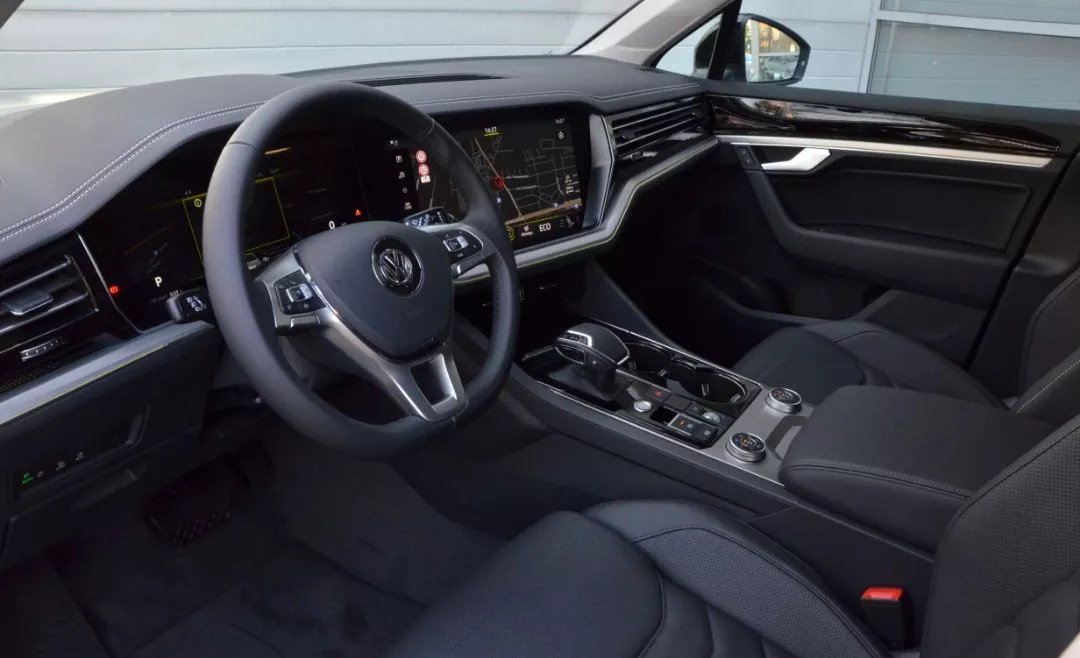
 The Touareg is a luxury SUV that debuted in 2004. Sharing a platform with the Porsche Cayenne, it offered both off-road durability and excellent on-road handling. The second-generation Touareg 2 debuts for 2008, and with it, a number of improvements. The Volkswagen Touareg 2 is a definite improvement on last year’s model, but to say it’s a full sequel is a bit of an overstatement. While its interior and overall build quality is excellent, the price tag is a bit high, and it could stand to be much more reliable. The Touareg 2, for all it has to offer, is tough to recommend. J.D. Power gives the Touareg 2 stars for dependability. Problems with the original include malfunctioning rain sensors, sagging suspensions, harsh shifting, wiring problems, dead batteries, and faulty door handles. It was recalled three times for insufficiently riveted seatbelt attachments, improperly wired tire pressure monitors, and improperly secured child restraints. Expect below average reliability.
The basic warranty lasts for four years or 50,000 miles. The Touareg 2 received 5 stars in government crash tests. IIHS results are not available. Anti-lock brakes, brake assist, hill assist, full side airbags, and stability control come standard. The Acura MDX includes a CD changer and leather seats, but costs several hundred more. The Audi Q7 has a DVD player, but has less towing capacity, lacks a moonroof, and costs several thousand more. The Infiniti FX35 includes leather and a CD changer, but can’t tow as much and lacks a moonroof. “On the road the Touareg is a bit sluggish off the line as this is a heavy vehicle at 5,100 pounds. Passing power is also not as strong as I would prefer as the engine worked hard to pass a pesky New Beetle that was loafing in the left lane. “I appreciate that the 2008 Touareg gets high safety marks, and as any dancing queen will tell you, this boogie machine’s style is right on. Somehow, though, I just wasn’t overly enthusiastic about it. It costs more than many other vehicles in its class and has too much non-charming quirkyness.
4WD is there to aid in traction and does no significant impact in being an aid to braking situations. More reckless driving. A 2004 National Highway and Traffic Safety Administration (NHTSA) study showed that SUV drivers have an 11% chance to be involved in their own fatal accidents. The study shows that SUVs tend to be owned and driven by drivers willing to take higher risks and may be more likely to drive the SUV drunk. Fuel Efficiency. There's no other way to say it. Larger tires create a higher drag coefficient. Wider and larger tires create a better grip, but is a detriment to overcoming wind resistance at high speeds, thus wasting gas. Higher profile creates a higher drag coefficient. Wider and higher profiles does not contribute to the SUV being aerodynamic, requiring brute force to overcome wind resistance at high speeds. Larger engine consumes more gas. SUVs usually come in engine sizes larger than 2.0. If you must, the most fuel efficient engine is a turbodiesel. By and large, SUVs consume 40% more gas than the average passenger car.
What can be done? SUVs will still be on the road, so if you're a passenger car driver, what can you do? Yes. Keep them alert by beeping them when you feel they're getting too close for comfort. Maintain active safety mode. Keep on using your senses to react fast to dangerous situations on the road. Drive slower. You can also benefit from driving slower so you can react to situations in time. What if I'm an SUV owner? Sell the SUV and get a more fuel efficient and safer car. A good but drastic choice. If you love your SUV, you won't be doing this. Be more alert. Very good for you. Going into active safety mode will help you. This still does not solve the mileage problem. Car pool. Saves gas but limits mobility. Your passengers will love it though. You'll have more eyes looking out for danger too.

 Description volkswagen group of america inc. Following its 2009 introduction the volkswagen passat cc is largely unchanged for 2010 though vws twin clutch dsg system now replaces the old clutch system in the. Cargurus analyzes over 6 million cars daily. Volkswagen cc 2010 sport. Find local 2010 volkswagen. Search over 4800 listings to find the best local deals. Search for new used volkswagen golf cars for sale in australia. Save 3749 on a 2017 volkswagen cc. View and download volkswagen 2011 cc quick start manual online. Find euro ncap latest ratings for recently tested vehicles sorted by publication date star rating and make with standard equipment or safety pack. Fave is a german automaker founded on 28 may 1937 by the german. Volkswagen is recalling certain model year 2010 2014 volkswagen cc and passat 2010 2013 eos 2011 2014 golf gti. 2011 cc automobile pdf manual download. Flksvan shortened to vw german. Motor trend reviews the 2010 volkswagen cc where consumers can find detailed information on specs fuel economy transmission and safety. The volkswagen cc originally marketed as the volkswagen passat cc in its first generation is a variant of the volkswagen passat that trades a coupe like profile.
 B. If the high side pressure is high and the low side pressure is low, this could indicate that the a/c compressor is stuck at its maximum displacement or that there is an other-than-specified restriction in the system. Signs of frost on the lines indicate the point of restriction. 2. Flush the A/C system with nitrogen or refrigerant. This requires using a "dummy" restrictor that is a straight opening at the flush point. DO NOT under any circumstances use air to flush or blow out the lines. This will introduce moisture to the system that will be difficult to get rid of. Flushing the A/C ensures that all the refrigerant and oil is out of the system so that when the charge procedure is performed, one can be as accurate as possible about the amount of refrigerant and oil in the system. 3. Inspect the restrictor for signs of damage. Look to see if the restrictor is completely plugged. On expansion-type restrictors, look to see if anything is blocking the movement of the valve. 4. Inspect the A/C lines for evidence of desiccant coming apart. This will typically look like a gray sludge paste (think valve-lapping compound). If the desiccant has come apart, flush the A/C system. The desiccant can plug up the restrictor or cause damage to the compressor. 5. When replacing the Volkswagen Jetta's compressor it is recommend to drain all the oil out of the compressor (if pre-filled) and measure the amount of oil. This way, the actual amount of oil in the A/C system can be known and accounted for. Tech Tips: VW/Audi recommends replacing the drier unit along with the compressor.