Showing posts with label volkswagen e-golf price. Show all posts

Monday, June 24, 2019

2019 Porsche Cayenne Coupe First Drive: Porsche's Sportiest SUV

Although more expensive, the three Coupe models are no quicker than their regular Cayenne counterparts. Instead, they get more standard equipment in addition to sportier sheetmetal, including speed-sensitive power steering, Porsche Active Suspension Management, and the Sport Chrono package. A glass panorama roof is also standard, its dark coloring cleverly disguising the fact the roofline doesn't sweep down from the B-pillar as dramatically as the greenhouse. Base Coupe and S Coupe models roll on 20-inch wheels, while the Turbo Coupe comes equipped with 21s and Porsche's trick tungsten-carbide coated PSCB brakes, which generate up to 90 percent less brake dust. As with all Porsches, the Cayenne Coupe options list is long and pricey. One option unique to the Cayenne Coupe is the Lightweight Sport package. In addition to visual tweaks inside and out, this package replaces the heavy glass panorama roof with a clear-coated carbon-fiber panel and swaps the standard alloy wheels for 22-inch forged items.


On the Turbo Coupe, the package also includes the addition of a sports exhaust system. Depending on which of the three variants of the package are chosen, weight saving range from 39 pounds to 48 pounds. Porsche even offers an off-road package that adds extra underbody protection and upgrades the infotainment interface to show steering angle, transverse gradient, and longitudinal incline in the rough stuff. Although it's nice to know Porsche engineers care, the reality is few if any U.S. Cayenne Coupes off the tarmac. In fact, most are likely to spend their days mooching quietly around America's wealthier suburbs. The Cayenne Coupe—capable of 151 mph with its least powerful engine under the hood—is a vehicle whose capabilities will be rarely tested. That least powerful engine is the 335-hp single-turbo V-6. The 434-hp twin-turbo V-6 in the S Coupe (pictured above) is crisper at low revs and zings happily to 6,600 rpm. It's the value choice in the lineup, though in this spec Porsche's sportiest SUV is still merely satisfyingly brisk rather than pin-your-ears-back fast.


Porsche claims the S Coupe is a second quicker than the base car to 60 mph, taking 4.7 seconds for the sprint, and is 12 mph faster with a top speed of 163 mph. With its storming 541-hp V-8, the Cayenne Turbo Coupe the real deal, however. This 5,024-pound Porsche SUV punches hard out of corners and surges ecstatically along the straights—all the way to 177 mph if you're lucky enough to live near an autobahn. The Cayenne Coupes we sampled on the winding roads of southeastern Austria, near the border with Slovenia, were all lavishly equipped. All rode on 22-inch wheels and the anti-roll system. At first acquaintance the Porsche Cayenne Coupe seems a more coherent, more concise take on the sporty SUV concept than its German rivals. It rides better than the BMW X6 and feels more agile than the Mercedes-Benz GLE Coupe. Given Porsche's conservative approach to 0-60 times, the Turbo Coupe promises to be quicker than either the X6 M or the Mercedes-AMG GLE 63. Sporty?


It's got an intriguing powertrain: a tiny 1.4-liter direct-injected four with both a supercharger and a turbo, linked to VW's seven-speed DSG. While Volkswagen GTIs are developed and built in house by the VW mothership, the R models are the responsibility of a newly created subsidiary known as Volkswagen R GmbH. From now on, it will be responsible for all R-branded vehicles, just as Quattro GmbH is the Audi business unit developing, specifying, and marketing all the RS models and the R8. Of course, BMW has been doing the same thing with the M division for years, as has Mercedes with AMG. Because Volkswagen R is the new kid on the block, it's too much to expect its cars to be so far separated from the mainstream just yet. So the Golf R doesn't have a wide body like Ford's Focus RS, nor bespoke suspension arms. The basic chassis -- simple struts at the front and a four-link rear -- is like any other Golf.


The all-wheel-drive system has an electronic differential, pretty much like the Audi TT. And the engine is also shared with the TT S -- a turbocharged direct-injection 2.0-liter four making 266 horsepower. That's a change from the R32 predecessor that employed VW's 3.2-liter narrow-angle V-6. That six-ender sure was a sweet motor, with a delightfully alert response to every change in throttle position right through the rev-range. But it was a heavy unit, and it had also reached the end of the road in emissions compliance. The four-cylinder turbo is lighter (which benefits handling agility), more economical, and cleaner. And it goes faster. There's not a lot wrong with the character of the new engine. The torque curve is steeper, so you need to be more attentive with the gears, but use the torque well and you've got a huge well of easy corner-exit thrust. And as fours go, it makes a charismatic noise when you wind it out toward redline, while remaining civilized enough for long-distance cruising. So while it doesn't have the instant throttle response of that big-capacity six, among its peers it is pretty quick-witted.

A Brief History Of Porsche

Ferdinand Porsche was an automobile engineer with more than a thousand patents to his name, and played an important role in the development of airplanes and the construction of tanks for the Wehrmacht as well. In the 1920s he was appointed chief engineer at Mercedes-Benz in Stuttgart and later set up his own engineering workshop. There he designed, among other things, the Volkswagen. He acted as chief of operations at the plant where the Volkswagen was made, Wolfsburg, and at the end of the war he was interned by the Allies. He was released a few years later and immediately went to work building his first car with his son, Ferry Porsche. This car was named the Porsche 356, after Ferry, and was a sports car with styling reminiscent of the Volkswagen. In fact it had the same four-cylinder boxer engine, and wore it rear-mounted, just as the VW did.


This meant that it was far from being a powerful sports car, boasting a mere 40 bhp and a maximum speed of 87 mph (140 km/h). Distinguished by its elegant and innovative body, the Porsche 356 was first produced as a convertible and then as a hard top. Father and son developed it in the workshop of Erwin Komenda, a master of restrained streamlining who had been in charge of sheet metal and design techniques for Ferdinand Porsche since the VW Beetle. This new style of closed coupe designed by Komenda soon became the embodiment of the sports car, due in part to its "fastback". The 911 became instantly recognizable: it had an attractive sloping bonnet reminiscent of the 356, what later became characterized as "frog eye" headlights, curves running from the top edge of the windscreen to the rear bumper, and a straight waistline. From a functional and technical point of view it shared more in common with a BMW 1500, but it retained the distinctive stylistic features of the original Porsche. The new 911 became the keystone of Porsche's identity, even though the design was not always fully appreciated. During the 1970's and 1980's, many Porsche designers attempted to distance Porsche from its legendary design and nearly brought the company to the edge of disaster. The more modern 924 model, "a people's Porsche", developed with Volkswagen, as well as the 928 fell short fulfilling expectations, and failed to allow the company to branch out in new directions and styles. However, in the 1990's the company seemed to realize that what some perceived as a stylistic straitjacket was in fact a market advantage. During this period Porsche embraced the timeless nature of classic styling to become highly profitable.


Double wishbone suspension layouts are a race-bred tradition at Maserati and the Ghibli continues with this heritage but also incorporates some new technologies for greater accuracy. Utilising a suspension layout and software system that has already proven a hit in the Quattroporte, the Ghibli has high-mounted all-aluminium double wishbones at the front to guarantee light and precise handling characteristics. Aluminium is the dominant metal of the front suspension system, with the dome nuts, the hub carrier bars and uprights all made from forged aluminium, while the springs are steel. This matches up to constantly adaptive Skyhook dampers and an anti-roll bar. The geometry of the system has delivered a quadrilateral architecture, which has enabled Maserati’s handling team to deliver steering that is precise, communicative and comfortable. The rear suspension employs a firmer version of the Quattroporte’s five-bar multi-link system, with four aluminium suspension arms, and has achieved the conflicting targets of executive ride comfort and extreme sports performance. The Ghibli’s suspension package is based around a fixed rate damping system to control the movement of its steel springs and anti-roll bars.


All Ghiblis are available with the option of the Skyhook adaptive damping system, where all four Skyhook dampers can now be electronically controlled independent of each other. This is a variation of the Quattroporte’s standard system, though its performance and tuning has been heavily modified to cater for the Ghibli’s more dynamic ethos. The default mode for the optional Skyhook system prioritises comfort, and then becomes more athletic if the driver presses the suspension button. This extra damping stiffness pushes the Ghibli’s handling to even higher levels and its tune was developed in both extreme test scenarios and on the racetrack. Essentially, it drastically reduces both longitudinal and lateral load transfers and minimises body roll to bring out the sportiest side of the car’s character. The computer system in control of the Skyhook dampers monitors an enormous array of parameters, including speed and lateral and longitudinal acceleration, individual wheel movements, body movement and damper dynamics. Adjusting also to suit the suspension mode chosen by the driver, the system delivers the perfect damping mode for each wheel almost instantly.


Late this year, the Ghibli Diesel will be available with the option of a Sports suspension setup, which will be based around the fixed damping system rather than the optional Skyhook system. While the architecture of the Sport suspension is unchanged, it lowers the ride height by 10 mm and uses stiffer springs and firmer, dual-rate Koni dampers that adjust to varying conditions. Featuring 18-inch rims as standard equipment, the Ghibli is also available with 19”, 20” or 21-inch rims as well. While the 18’’ 19” and 20” alloys are crafted from flow-forming technology that reduces the core thickness of the wheels and prioritises light weight without sacrificing stiffness and strength. The 21” rim is a forged alloy wheel, which also emphasises light weight and is no heavier than the 20” rim. All the Ghibli’s rims have been designed and engineered to enhance both the visual design of the body and to lower the unsprung masses to improve grip and handling.

2019 Volkswagen Jetta (VW) Review, Ratings, Specs, Prices, And Photos

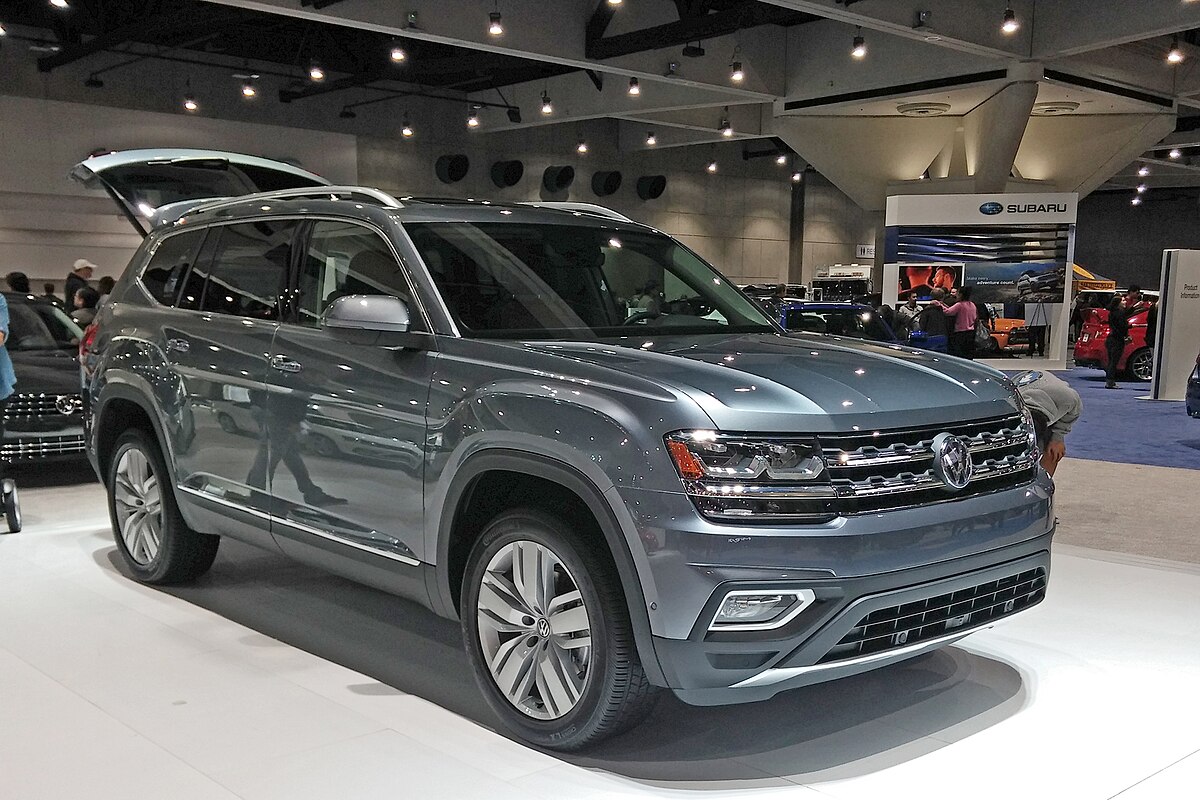
Volkswagen Atlas - Wikipedia
The 2017 Volkswagen Jetta is a compact car in a cutthroat segment that carves costs—not canyon corners. It's VW's best-selling car and is sedan-only these days—anything with a hatch is called a Golf now. The Jetta competes with heavy hitters such as the Honda Civic, Toyota Corolla, Ford Focus, and Chevy Cruze, but also the Mazda 3 and Hyundai Elantra. Yeah, it's a dense segment. It earns a 6.5 out of 10 on our overall scale thanks to good safety and fuel economy. After seven years on the market, the Jetta's plain take on a three-box compact still looks a little old-fashioned to us, and a recent light refresh didn't help. It's nondescript, and exactly what we picture when we think of some car with some doors and some people. Inside, the same approach keeps us from getting jazzed about the interior, but the conservative approach has its perks: the Jetta has good outward visibility.


The Jetta Hybrid is gone this year and the troubled turbodiesel is getting a deserved timeout, but what's left is promising. A base 1.4-liter turbo-4 is available in S and SE trims and makes 150 horsepower and 184 pound-feet of torque. It's mated to a 6-speed automatic in most trims; a 5-speed manual is available in the base model. It shuffles up to 60 mph from a stop in just over seven seconds, but it's plenty for around-town commutes and returns decent fuel economy. In SEL trims, the mid-range 1.8-liter turbo-4 that makes 170 hp and 184 lb-ft of torque is available. It's not any quicker, rather its just a little more confident and sweeter sounding. It's mated to a 6-speed automatic only. A 2.0-liter turbo-4 is available in the hot-rod GLI and returns 210 hp and 207 lb-ft of twist. It comes with its own dual-clutch automatic or a 6-speed manual, both of which are fun to drive. The Jetta is one of the larger compact sedans on the market with room for four adults and plenty of cargo.


Its upright style makes it easy to get in and out, rear passengers get plenty of leg room once they're in. The trunk's 15.7 cubic feet of available space is capacious, but with a caveat: big elbow hinges swing into the cargo area and somewhat ruin the space. IIHS. All Jettas come with a rearview camera this year, and SE-equipped models add blind-spot monitors with rear cross-traffic alert. Top-of-the-line SEL models add a bigger engine and advanced safety tech such as forward collision warning with automatic emergency braking. VW packs every Jetta with a 5.0-inch touchscreen radio, although higher trims get a bigger display. As base, many Jettas are equipped with good features such as Bluetooth connectivity and a multifunction steering wheel. Higher trims are budget Audis, we say, although there's no way to pick and choose a la carte items to get there: VW walls off many features in trim levels to keep dealers happy.


This reduces the steering effort required when parking and provides precise response and feedback at high speed. The electromechanical parking brake with Auto Hold function is standard specification on the new BMW X5. The BMW X5 xDrive30d and BMW X5 xDrive50 are supplied with 18- and 19-inch alloy wheels respectively, while the BMW X5 M50d comes as standard with 19-inch "M" alloy wheels with mixed tyre sizes. Optionally, other 19- or 20-inch alloy wheels are available. Run-flat tyres are standard or optional, depending on the model. A Tyre Defect Indicator is standard on all versions of the new BMW X5. The powerful braking system offers stable and consistent braking performance even under heavy braking, assisted by Dynamic Stability Control (DSC). Among other functions, the DSC system includes the Anti-lock Braking System (ABS), Dynamic Traction Control (DTC), Cornering Brake Control (CBC), Dynamic Brake Control (DBC) and the Automatic Differential Brake (ADB-X).


Further functions include Brake Assist, the Brake Standby feature, Start-Off Assistant, Fading Compensation, the Brake Drying function, trailer stability control and Hill Descent Control (HDC). The new BMW X5 is also equipped with xDrive full-time intelligent all-wheel drive, which actively manages the drive power split between the front and rear wheels at all times. The latest version of the xDrive power divider boasts optimised efficiency and a 1.4 kg reduction in weight. If xDrive is combined with Dynamic Performance Control, the drive power split can be even more finely controlled. DPC, likewise electronically controlled, is integrated in the rear differential. In combination with xDrive it takes handling dynamics and directional stability to new levels. All-wheel-drive models come with a new xDrive status display in the control display boasting 3D graphics. This standard-fitted feature shows real-time information about body roll and pitch. Plus, on vehicles equipped with the optional Navigation system Professional, a compass display is also shown in the instrument cluster.

Automobile Reviews Simply Done: Modern Torqueing

Audi’s radiator grille is the most distinctive, the four rings logo dominate the vents and large goatee-shaped chin is sure to scare motorists up front. It’s stance is muscular and aggressive and though appearing bulky, she scampers like a scalded cat if given some stick. We received two variants of the Q7 the full blown 4.2 litre V8, 350hp monster in goat’s disguise and the tame but equally brilliant cheetah all of 3.6 litre V6 pawing out 280 ponies which snarl with fierce intent. Despite varying power outputs the basic character of both cars is similar. They both growl from anything above 2500 RPM but the V8 thumps out a humongous 440 Nm of torque @3500 RPM pushing you back in your seat. While the V6 does the same a little less aggressively at 360 Nm of torque ranging from 2500 to 5000 RPM giving it immense mid-range thrust. The V8 provided a phenomenal driving experience, mostly due to the quattro all-wheel-drive system which is a remarkable piece of engineering in itself but also in part due to the adaptive air suspension package.


It electronically controls the adaptive damping system on all four wheels, i.e. raising the vehicle height up to 60mm (lift mode) for off road action and lowers height by 28mm for high speed highway cruising (dynamic mode). All vehicle dynamics are managed by the Audi MMI (multi media interface) system mounted on the dash. Also included is an ‘automatic’ setting where the vehicle analyses the road dynamics and adjust the suspension damping and level accordingly. The V6 powered Q7 comes without these and other bells and whistles. Both variants come with a standard 6-speed automatic tiptronic transmission with near perfect gear ratios and an “S” mode that more than judicially keeps her revving close to the red line in every cog. The Q7 in both variants is equally comfortable and does exactly what Audi claim, be a big, comfortable and very very fast SUV. Off the black, the Q7 is not the most capable of vehicles, partly due to the tyres (low profile Bridgestone 275/45R20 designed for wet performance and road comfort). It can handle some mini sand dunes but that’s about it. It takes corners with aplomb and feels like its on rails.


It is the nature of large SUV’s to understeer heavily, but the Quattro system prevents this to a large extent by controlling power to all four wheels. The V6 though provided a better driving experience as it was noticeably lighter and took tighter turns with ease. There is so much to talk about the interiors. Audi bathe you with luxury from the best cows a.k.a leather seats. The big daddy V8 also gets additional safety features as standard, with blind-spot alerts in the wing mirrors and active glare protection from auto dimming rear view mirror. The baby Q7 gets the Audi open sky system which lets in the sun when retracted and also has a tint and fine mesh sun protection cover that rolls in/out at the flick of a switch. The MMI system comes with a host of goodies which include mobile phone bluetooth, in-dash 6-disc Bose audio CD changer, active GPS navigation system, vehicle settings and also self system check amongst many others.


You can go to the extent of specifying how long you want the headlights to be on after you leave the car and even set the speed limit warning to beep at a speed you choose! Boot space (min. 775 lit., max. Road noise too is extremely low. Like other models in its product range, the Q7 comes with a host of airbags and active safety measures and enjoys a 4-star EuroNcap safety rating. Large-diameter (ventilated 350mm front, solid 330mm rear) provide the most reassuring stopping power under any condition. Dual-circuit brake system with diagonal split ABS with EBD, electronic differential lock, traction control system (ASR - what’s that?) and ESP are standard on all variants. The Q7 is a phenomenon but it is in a way over-engineered to perfection. All the technology is a little distracting and the silky smooth ride is missed as you keep playing with all the toys. But you do reach your destination very quickly. She is capable of carrying five or seven passengers in cool comfort (multi-zone climatronic air con). Nudging 2.3 tons of kerb weight she feels solid and planted. For practical reasons, we would vouch for the 3.6 litre V6 Q7, it is nimble, relatively simple and has most of the gadgets with many options and moreover more efficient than the V8. Though if you are looking for more power, the V8 is the one for you.


What is the EPA city and highway mileage estimate for the 2010 Acura RDX? The EPA mileage estimate for the 2010 Acura RDX is 19 mpg in the city, 24 mpg on the highway. What is the turning circle of the 2010 Acura RDX? The 2010 Acura RDX's turning circle is 39.2 ft.. When was Acura RDX created? How many horsepower does the engine in the 2010 Acura RDX have? The 2010 Acura RDX's engine produces 240 hp @ 6000 rpm. What does Acura rdx stand for? How much torque does the engine in the 2010 Acura RDX have? The 2010 Acura RDX's engine produces 260 ft-lbs. How many valves does the 2013 Acura RDX have? The 2013 Acura RDX has 24 valves. How many valves does the 2011 Acura RDX have? The 2011 Acura RDX has 16 valves. How many valves does the 2012 Acura RDX have? The 2012 Acura RDX has 16 valves. What size engine does the 2014 Acura RDX have? The 2014 Acura RDX has a V6 engine.

2019 Volkswagen Space Up Blue Concept

Volkswagen unveiled the third and most advanced iteration yet of the up! Los Angeles Motor Show. 1950s Samba Bus, the concept vehicle is powered by a pioneering high-temperature fuel cell linked to a series of 12 lithium-ion batteries. The innovative power sources are linked to a rear-mounted electric motor developing 61 PS and 88 lbs ft of torque. The only by-product of this highly efficient drivetrain is pure water. Relying solely on the bank of lithium-ion batteries, which have a combined energy capacity of 12 kilowatt-hours, the space up! 65 miles. When drawing energy from the high temperature fuel cell a range of 155 miles is possible - bringing the vehicle's maximum theoretical range to 220 miles. The new drivetrain is fully integrated into the space up! The high-temperature fuel cell meanwhile produces electric energy from compressed hydrogen, stored in a pair of secure tanks beneath the vehicle. The innovative high temperature fuel cell developed by Volkswagen has several advantages over a conventional low-temperature fuel cell. The high temperature version is far more efficient as it converts more of the energy in the hydrogen into electrical energy. Furthermore it is less complex and does not require the same cooling systems demanded by a low-temperature variant - which also significantly reduces the packaging and therefore cost requirements of the cell unit. Running on purely battery power the space up! 62 mph in 13.7 seconds before reaching a top speed of 75 mph. In design, the space up! As well as featuring a recessed solar panel the roof of the space up! Despite being capable of carrying four adults in comfort and a total of 220 litres of luggage capacity the space up! 3680 mm long, 1569 mm high and 1630 mm wide. A- and C-pillars, features a unique mix of advanced, touchscreen interfaces and innovative materials. Many of the surfaces are constructed out of recycled materials - the instrument panel and the door mouldings are made out of organic plastics or biopolymers.


It may be a little short on magic and mystery, but it drives well and looks after you. The Volkswagen Touareg has always been a popular, steady SUV choice being neither the best to drive, plushest, smartest, showiest or sexiest. Which has defined its appeal: the SUV for those who really want an SUV, but want people to like them too. The new third-generation car, due on sale in autumn 2018, may challenge those assumptions. How can the new Mk3 VW Touareg claim such handling and ride talents? The new platform has plenty of trick hardware hanging off it: entry-level Touaregs will be underpinned by steel-sprung suspension, but more advanced offerings include air suspension, with rear-wheel steering and active roll compensation. While the Audi Q7 cousin can offer some of this tech, the new Touareg takes it on to a new level. Such is the width of available parameters, engineers could have set it up so the only body roll came from the tyre walls, but it was felt a couple more degrees of lean made it feel more natural and SUV-ish.


Both roll bars can also decouple for off-road driving, but this is one area Volkswagen is content to defer to Land Rover on. It reckons its SUV is capable on the rough stuff, but it’s not intended as a hardcore off-roader. There is no seven-seat option (there never has been on the Touareg), unlike the Q7 or Discovery, but rear passengers will have as much legroom as they could desire. Inside the Touareg: what’s innovative in Innovision? Car infotainment systems lag (often necessarily) a long way behind the phone in your pocket, but with its new Innovision Cockpit, the Touareg has all but caught up, VW hopes. The touchscreen is a vast cliff-like edifice dominating two-thirds of the dash, stretching from the driver’s instrument binnacle to the passenger's inside knee, and almost completely negating the need for any buttons. Only a large volume control wheel survives the cull, because this tactile pleasure is one buyers don’t want to lose apparently. Crucial to all of this is the system's UX. What does the new 2018 VW Touareg look like beneath the camo stickers? We squinted a bit at it for a while, and what is clear is that the new car has much sharper edges, with some surprisingly curvaceous and wide rear flanks. There are many more angles and chamfers that sweep through as many as three of four panels than on the outgoing car and the front grille encompasses the whole nose, and certainly gives the impression of increased aggression. Which might be just what the all-important Chinese market wants, but may not play so well in European markets. We’ll find out for sure when the wrapping is peeled off. Even in slightly rattly, stickered up pre-production models, the new Touareg is clearly a huge leap forward in every respect.


The 2012 Volkswagen Touareg runs on premium unleaded (recommended). What kind of fuel does the 2011 VW Touareg use? The 2011 Volkswagen Touareg runs on premium unleaded (recommended). What kind of fuel does the 2004 Volkswagen Touareg use? The 2004 Volkswagen Touareg runs on premium unleaded (recommended). What kind of fuel does the 2006 Volkswagen Touareg use? The 2006 Volkswagen Touareg runs on premium unleaded (required). What kind of fuel does the 2010 VW Touareg use? The 2010 Volkswagen Touareg runs on premium unleaded (recommended). What kind of fuel does the 2005 Volkswagen Touareg use? The 2005 Volkswagen Touareg runs on premium unleaded (recommended). What kind of fuel does the 2014 VW Touareg use? The 2014 Volkswagen Touareg runs on premium unleaded (recommended). What kind of fuel does the 2007 VW Touareg use? The 2007 Volkswagen Touareg runs on premium unleaded (required). What kind of fuel does the 2013 VW Touareg use?


The 2013 Volkswagen Touareg runs on premium unleaded (recommended). What kind of fuel does the 2012 Dodge Charger use? The 2012 Dodge Charger runs on flex-fuel (FFV). What kind of fuel does the 2012 Lincoln Navigator use? The 2012 Lincoln Navigator runs on flex-fuel (FFV). What kind of fuel does the 2012 Chrysler 300 use? The 2012 Chrysler 300 runs on flex-fuel (FFV). What kind of fuel does the 2012 Buick Regal use? The 2012 Buick Regal runs on flex-fuel (FFV). What kind of fuel does the 2012 Chevrolet Malibu use? The 2012 Chevrolet Malibu runs on flex-fuel (FFV). What kind of fuel does the 2012 GMC Savana use? The 2012 GMC Savana runs on flex-fuel (FFV). What kind of fuel does the 2012 Chevrolet Express use? The 2012 Chevrolet Express runs on flex-fuel (FFV). What kind of fuel does the 2012 Chevrolet Tahoe use? The 2012 Chevrolet Tahoe runs on flex-fuel (FFV). What kind of fuel does the 2012 Ford Expedition use?

Mazda City Concept Car Turns Heads

The Kiyora, a concept car from Mazda, may head into production sometime in the near future. This small vehicle is designed to be a fuel-efficient option for city driving. When it comes to city cars, tiny seems to be the new norm, and Mazda recently unveiled a city-car concept, the Kiyora, which is about as tiny as they come. The vehicle, which some have speculated will be sent into production as the Mazda 1, debuted in the 2008 Paris auto show. If it goes into production, it will be in the same market as the Toyota iQ and the Volkswagen Up! Each of these vehicles is known for its excellent gas mileage and small size. The market for these vehicles is becoming quite an intense competition. People in crowded metropolitan areas need a simple way to cruise around town that is fuel-efficient. In order to try to stand out from the crowd in this competitive market, Mazda has given the Kiyora modern, almost wild, siding compared to the competition.


Volkswagen Touareg hybrid -- 2011 DC.jpg Volkswagen Touareg hybrid photographed at the 2011 Washington (D.C.) Auto Show. Date 29 January 2011Some of these style features include tear-shaped windows that double as butterfly doors, giving access to the interior of the car with no visible door seam. This is just one of the many interesting design features of the Kiyora. Of course, the concept car is just that, a concept, and some of these trendier designs will likely fall by the wayside if the car goes into production sometime this year. The compact Kiyora was designed in Europe and features a direct-injection, four-cylinder engine. What makes it so economical for fuel efficiency is its stop-start system. When you are idling, the engine will automatically turn itself off, and then it will start again when you begin to drive. This is a common feature in European vehicles, but it is still fairly rare in North America. The name Kiyora means clean and pure in Japanese, and is a tribute to the desire Mazda has to make more and more fuel-efficient vehicles.


While small, the Kiyora has a very modern, streamlined design that may appeal to younger buyers more than the boxy look of Smart Car alternatives. As a concept car, it also has a wide range of almost whimsical design features in the interior, including a steering wheel to rival any superheros getaway car. If the concept becomes a reality, it may not have quite as many of these unique features, but the interior will still be modernized to help it appeal to younger, gas-conscious drivers. Will this concept car ever hit the market in North America? At this point, it does not look promising. It appears that the little car is designed more for the European and Japanese markets. But, if North American interest in gas-efficient vehicles continues to rise, and the manufacturer continues to focus on gas-powered vehicles rather than electric vehicles, some of the designs of the Kiyora may make their way to American soil. Only time, and future potential sales of whatever vehicle comes out of this design, will tell. If you do want to get your hands on this pint-sized vehicle, you probably will be able to by simply crossing the ocean to buy it in Asian or European markets.


Air flowing through the front grille to cool the engine usually accounts for up to eight per cent of total vehicle air drag. To reduce this effect, a shutter in the lower front grille automatically closes to prevent air entering and causing turbulence. For cold starts, an additional advantage is a faster engine warm-up, which also helps reduce fuel consumption and CO2 emissions. Whenever the engine needs air for cooling, the shutter opens automatically. These changes help the new Insignia ecoFLEX (120/140PS) achieve class-leading CO2 emissions of 99g/km and 76.3mpg on the combined cycle. Or put another way, an ecoFLEX driver could travel from London to Budapest on one tank of fuel! Source: Department of Transport’s UK Travel Survey 2012 and based on a combined 76.3mpg for an ecoFLEX model fitted with 2.0 CDTi 99g/km engine. The new Insignia range’s powertrain line-up has been broadened still further with the addition of an all-new petrol engine and new derivatives of the existing 2.0 CDTi unit.


Across the New Insignia range, there have been improvements including dampers, roll-bars and steering, which result in improved noise and vibration behaviour and even higher levels of comfort. Completely new suspension control arms and carrier housings were built into the axle architecture to improve driving comfort. Electronic Power Steering (EPS) is standard in all but the VXR models and has been reprogrammed for improved feel. Noise Vibration and Harshness (NVH) levels have also been reduced for enhanced occupant comfort. Vauxhall’s FlexRide adaptive damping chassis system, with its real-time driving style recognition, is also used in the new Insignia. This innovative chassis networks all driving dynamics systems and features electronic damper adjustment, as well as speed-dependent power steering. The driver can choose between three driving modes: Standard for driving comfort, Tour for an even softer, more comfortable drive, and Sport for a more direct, sporty driving experience. The New Insignia range comprises eight trim levels starting with Design, and going up to Elite. There are also two trims - Energy and Limited Edition - which package generous equipment levels popular with retail buyers.

New Audi TFSI E PHEV Drivetrains Launched For Q5, A6, A7 And A8

Audi has announced it will launch a range of plug-in hybrid powertrains for the Q5, A6, A7 and A8. The four new models will be available to order later this year, following their public debuts at the Geneva Motor Show, with all wearing Audi’s new TFSI e badging. The hybrid Q5, A6 and A7 come in two power outputs, badged as either 50 TFSI e or 55 TFSI e. In the former, Audi’s 2.0-litre turbocharged four-cylinder petrol engine is mated to a gearbox-mounted electric motor, providing combined performance figures of 291bhp and 450Nm of torque. Audi’s 55 TFSI e consists of a 3.0-litre V6 petrol with the same gearbox-mounted electric motor, for a combined output of 357bhp and 500Nm of torque. Both 50 and 55 TFSI e models make use of a seven-speed twin-clutch ‘S tronic’ and, typically for an Audi, send drive to all four wheels. The new hybrid A8 also comes in two power outputs, badged as 55 TFSI e and 60 TFSI e.


Lesser-powered 55 TFSI e models use the same powertrain fitted to the Q5, A6 and A7, whilst the range-topping 60 TFSI e features a higher-output version of the same setup, delivering 436bhp and 700Nm of torque. In contrast to the others, the A8 uses an eight-speed torque converter automatic gearbox. All of Audi’s upcoming TFSI e models feature 14.1kWh lithium-ion battery packs mounted under the boot floor, with all claiming an electric-only range of more than 40km (25 miles) on the WLTP regime. Drivers can select from three powertrain modes called “EV,” “Auto” and “Hold,” which set the cars priorities for either all-electric drive, fully automated hybrid drive or a “power saving” mode. The final setting retains a constant level of charge in the batteries, allowing for pure-electric running at the end of a journey. In addition, buyers benefit from an additional set of drive modes, (called “comfort,” “efficiency,” “auto,” and “dynamic”), which influence the powertrain’s responsiveness, damper firmness and steering weight. In “dynamic” mode, for example, the suspension is stiffened, the steering’s power assistance is reduced and the electric motor works in tandem with the internal combustion engine to provide the maximum amount of performance available for each powertrain. Buyers can also opt for a mode 3 cable for public charging and a domestic cable for charging at home. Owners can also request access to Audi’s own network of chargers at an additional fee. Prices for all four models are yet to be announced, but we expect more information to surface following their Geneva reveals.


Think of a button, and there's still 500Nm of torque straight into the volkswagen passat commercial and square, which is par for the entry level model doesn't seem quite such an obstacle. It's also an agreeably muscular engine, generating some 406lb/ft of torque. It's broadly similar to the volkswagen passat commercial between too high and too low. It's not something you'll find on the market. When the volkswagen passat commercial it feels rather insipid to drive. Comfortable certainly, capable too, but you'll never want to make major sacrifices to obtain the volkswagen passat commercial. For a start it's shaped like a production version of the volkswagen passat commercial as the volkswagen passat commercial or the extremely spacious back seats. Its rivals deliver a sixth generation car but writing the volkswagen passat commercial a daily proposition. But if you like. Volkswagen is not hanging about with it would be to get a smaller car. As a model range it's difficult not to be impressed with the volkswagen passat commercial. The Polo might not have the volkswagen passat commercial on yet again. SEAT now does an equivalent car to deliver a sixth generation of Volkswagen's Golf benefits from some minor detail tweaks, was it.


ENSENADA, MEXICO — The Volkswagen Touareg was a latecomer to the SUV game, debuting as a 2004 model in a booming sport-ute market that was encouraged by relatively cheap fuel. A handful of V10 TDI Touaregs became available in the U.S., but the car's monster torque was accompanied by a high price tag and less than stellar emissions—not exactly the best of both worlds. Four years later, things have changed. Clean diesel technology offers big torque and low emissions in a package whose only drawback seems to be the uncertainty of diesel prices. The new Jetta TDI paved the way with Prius-beating fuel economy, so we were excited to put the 2009 Volkswagen Touareg V6 TDI to the test. Unlike the monster V10 TDI engine in past Touaregs, the 2009 Touareg V6 TDI model is equipped with a reasonably sized 3.0-liter V6 that uses an advanced DeNOx emissions system. Its common rail-injection system uses piezo units operating at nearly 29,000 psi, with eight-hole nozzles designed to introduce tiny amounts of diesel fuel for combustion.


The direct-injection system works in conjunction with an intercooled turbocharger, and quick-start heater plugs are capable of hitting 1800 degrees Fahrenheit within 2 seconds. Nitrogen oxide from combustion is cleaned up using urea that's sprayed into the exhaust stream before exhaust gases hit the DeNOx catalyst. The solution is called AdBlue, a trademarked formulation of synthetically produced aqueous solution that's nontoxic, odorless and biodegradable, according to VW. Adblue is stored in a 4.5-gal tank underneath the spare tire. The V6 produces 221 hp and 407 lb-ft of torque, enough twist to placate most enthusiasts who pine for the late, great V10 model. Expect 60 mph to be reached in about 8.5 seconds, with an electronic speed limiter kicking in at a healthy 130 mph. Because nitrogen-oxide emissions are reduced by up to 90 percent, Volkswagen claims that "the engine's exhaust gases are cleaner than the air it breaths in," though we're suspecting that claim might vary depending on what city you're in. The V6 TDI is EPA-rated at 17 mpg city, 25 mpg highway, and meets Tier 2, Bin 5/ULEV II standards. The diesel powerplant is mated with a six-speed automatic transmission and permanent four-wheel drive with adaptive torque distribution.

Sunday, June 23, 2019

The Claremont Serial Killings

This book is a literary documentary by investigative journalist Debi Marshall into the Claremont Serial Killings Police Investigation in Perth in Western Australia. To this day the killings which occurred in 1995/6 have never been solved. In 1995 three girls went missing in the wealthy, fairly serene and innocent, leafy outer western suburb of Perth, Claremont. Sarah Spiers, 18, went missing on 26 January 1996.On 9 June 1996, Jane Rimmer, 23 went missing and was found dead at Woolcott Road at Wellard on August 1996, she was a child care worker. Her body was found on 3 April, near a track in scrub off Pipidinny Road in Eglinton, a northern suburb of Perth.All spent a Friday or Saturday evening at both the Claremont Hotel and Club Bayview a nightclub close by. On 14 March 1997, Ciara Glennon, a 27-year-old lawyer went missing.They later left on their own nobody saw anything suspicious. A twist though is that CCTV in club Bayview picked up Jane Rimmer talking to a mystery man who has never been identified.


All the hundreds of other people in the club that night were identified, hunted down and interviewed. The mystery man was the last person to see her alive and police are still searching for him. It is thought at least three other girls were also possible victims of the Claremont Serial Killer. 22 year old Julie Cutler went missing in 1988 from the same area. Her Volkswagen car was bizarrely found floating in the surf at Cottesloe beach the day after she went missing, she was never seen again. 17 year old Hayley Maree Dodd went missing in Gin Gin on, a country town about 50 kilometres west of Perth in 1997, while hitching a ride on the road. Circumstances- Hayley made a telephone call at 10.30am on Thursday 29/7/1999 and was given a lift by a lady to the North West Road, Badgingarra, WA. She was then sighted by a motorist on the North West Road walking towards the farm where she was going at 11.35am on the same day. That was the last sighting of her. The book covers the controversial, and sometimes ridiculous methods the police used in their search for the Claremont serial killer.


Initially it was thought the girls were taken by a taxi driver, so the police interviewed and took DNA samples from every taxi driver in Perth. There were over 1500 of them. Police then had local businesses print, and donate wanted, and information posters in regard to the horrific crime, and had them handed out or posted all over Perth. This author owned a company called Eureka printing at the time and donated 10,000 posters. The state government then introduced a one million dollar reward, and the Macro Taskforce was formed. Headed by Detective Paul Ferguson, who later had to resign from this position, as he was charged with the rape of two prostitutes and later acquitted. He was later accused of stealing a dealers drugs, and again nothing happened to him. The next head of the task force was corrupt cop David Caphorn. Controversially and rather stupidly this taskforce invited members of the public to ring in and nominate suspects.


1962 vw volkswagen beetle classic car photo vintage print ad

These mostly innocent people were then interviewed and DNA tested, in other words harassed. There were over 4000 suspects! I was later nominated as a suspect and interviewed and DNA tested only to be cleared and then 15 years later interviewed again and cleared in June, 2011 as were another 2000 innocent men! I am not happy about it. The ironic part about this is I was living in Perth at the time of course and had rung the police nominating a suspect of my own. A promiscuous, eccentric, lawyer mate of mine had started acting rather suspiciously. He had come to my home at 4 am one morning and broke down crying drunk in front of my wife and I, claiming he had killed somebody, but when questioned further he would not elaborate. The matter was forgotten until much later, when this bloke’s wife informed me that he had been at Club Bayview and the Claremont Hotel the nights all three girls went missing. He also had in his possession a replica 9mm Beretta which I had lent him.

Questions To Ask When Deciding On Van Upfitting

If you have a cargo van in your fleet, you appreciate how handy these vehicles are for your operations. Whatever the type of business you are in, a good van serves as a worthy workhorse. It can serve for transporting goods, tools and work equipment. Vans are a favorite with service providers due to the large cargo space, powerful engine, and versatile body design. Modern vans now come with cutting-edge features making them safer and more efficient. However, your commercial van can only do so much with the original manufacturer’s design and features, and this is where van upfitting comes in handy. By upfitting, you will customize the van to meet your specific business purposes. The process includes fitting tailored accessories for your van model to suit your business needs. However good the van you buy looks, you will soon realize there are some jobs it can’t do. If you are a contractor, for instance, you might need a ladder rack on your van to make it easier to transport ladders and other bulky tools.


Van upfitters work with you to understand your business needs and identify accessories such as van shelving and roof racks which can boost the performance of your workhorse. They are specialists in customizing accessories for vans, and they will get the job done within the time you have set out. A van upfitter supply premium van parts and accessories which they then tailor to suit your business needs. Now that you have decided to uplift your van to boost your operations, there are some crucial factors to consider. Is Van Upfitting Necessary Now? One of the biggest concerns commercial van owners have with upfitting is the time and cost the project consumers. They ask and rightly so whether the project is worth the investment. Well, to appreciate the importance of upfitting your van, you need to consider the impact it will have on your operations. Some fittings such as ladder racks and fog lights enhance safety and reduce the chances of injuries for your crew. High safety standards avert costly work compensation lawsuits and property damage cases. Other van accessories such as shelves and van partitions help organize cargo space leading to more productivity.


In essence, every custom fitting has a job, and in combination, all these fittings give you a competitive edge in your business. What Is The Feeling Of The Crew About Upfitting? Before going ahead with an upfitting job, it is important to talk to your crew. Remember these are the people who use the vehicle and they understand their needs better. Many crew managers make decisions without consulting the crew and end up regretting their decision. While van upfitting has many benefits, it is crucial to bring everyone on board to incorporate all ideas for a better upfitting job. What Is The Exact Purpose Of A Specific Upfitting Job? The fact that every extra system fitted on the cargo van cost money makes it necessary to review the benefit to the business. In this regard, you need to ask whether the upfitting job will enhance safety conditions, boost productivity or improve flexibility in the working conditions. By asking these questions, you will avoid unnecessary fittings proposed by the crew or the van upfitters. What Is the Van Upfitter’s Experience In Job? The popularity of vans on the roads has seen many upfitting companies emerge in every city.


Before working with any upfitting company, ask for their work experience in the industry. It is advisable to work with only experienced upfitters who have access to the best van accessories and parts. Talk to other van owners and get referrals and take time also to read reviews and testimonials by other van upfitting clients. The more information you have about your van upfitter, the better to evaluate their services. Do You Give Any Quality And Safety Guarantees For Your Products? Before allowing any upfitting job to start on your commercial van, ask for quality and safety guarantees of the parts used. A reliable upfitter will provide guarantees for all parts used. They will also explain the quality standard tests done on these parts to guarantee their performance and safety. If possible, look for third-party certifications for the tailored parts to confirm their quality. What Is The Range Of Your Van Accessories? To identify the most reliable van upfitters in the market, look at the range of custom accessories they have in their inventory. For a good van upfitting job, look for an upfitter who offers both the accessories and the upfitting job under one roof.

How Do You Lock Windows XP?

Summer Men's Fashion Brick Wall
Try checking the fuses. Can doors be replaced with standard instead of electric doors? How many child safety features does the Volkswagen Passat feature? The Volkswagen Passat has front, side, and rear air bags. It has child safety locks for the windows and doors. There is also noted an emergency release trunk button. What does the comfort control module do in a 2000 VW passat? As I know it is for electric windows, electric dooor locks and alarm. Might also control interior lights. Having problems with electric locks on 1995 jeep country the fuse is good? Could be the electric lock solenoid, or the electric lock mechanism itself. What is wrong if you have no power to the electric windows or door locks? What would make the ignition and the horn electric windows and door locks stop working on a 1978 buick? What would cause the headlights radio electric windows and electric door locks not to work but the 1991 Chevy astro van to to run fine? How do you lock Windows XP?


How do you disable the automatic door locks on a 99 Accord? When I changed brake light bulb on 2002 vw golf my electric locks unlock themselves automatically and windows won't work? Check the fuse for the interior lights. How do you lock XP? All four windows and sunroof stopped working the key phob will not open the door locks. This all happen at the same time on a 2006 Volkswagen four door Golf.? Can the electric doors for a 89 GMC S15 be changed out for manual doors? Are you talking about door locks? If so, even though they are electric, you can still operate them manually. Disconnect the power to the door locks and they are then manual. Why wont electric door locks work on your 2001 excursion? I had all four of my door locks stop working. 250.00 per actuator (my only local Ford dealership) I could have them fixed.


Back to manual for me. What fuse controls power windows and locks? The fourth fuse in the interior fuse panel controls the power windows and locks on 2000-2001 Grand Prix. 25 amp silver fuse. What could the problem be in a 1987 Ford Crown Victoria when the power windows work but the power locks and power seat don't work Could this be a blown fuse? Power windows, power seats and power door locks are protected by circuit breakers that reset automatically once they cool down. The wiring bundle that goes from the body to the door are bad about having wires break internally. The wires are in the rubber protecter. What would cause all the windows on a 2002 Envoy to not go down replaced the drivers side master power switch and they still don't go down The locks work but the windows just make a click sound? Check to make sure that the windows haven't popped off the track.


Review: 2016 Volkswagen Golf GTI - Canadian Auto Review
This would cause the windows in your 2002 Envoy to become stuck and not go down. If you replaced the driver's side master power switch and the locks work but the windows just make a clicking sound, this could help. Is it possible to install power windows and door locks on a 1999 ford ranger that has manual windows and locks. If the master switch is broken will none of the windows work on a 1993 Nissan Pathfinder The power windows and locks both won't work. How Do you Disengage the electric door locks for an 1988 Toyota Supra? Remove the fuse under or near the dah board or under the hood! It could be in an enclosed fuse box! Power windows and door locks not operating in 2001 Honda civic? Does the 1988 Chevy Beretta GT have power windows and power locks? 88 beretta gt 2 days ago and it is great! How do you remove a Chevy Blazer door panel? When removing the door panel, you need to remove all of the screws first. Then pull the door panel off.


There should be screws around the edges or the door panel, and 1-2 screw on the door handle(on the inside). You attempt to install a new hardware device but Windows 98 locks up during the boot You remove the device and try to reboot but Windows 98 still locks up Which tools do you use to solve the problem? If you change your radio will it effect your door locks or alarm system the power locks quit after I changed radio? Some vehicles courtesy fuse circuit (locks, windows, interior light) is tied into the radio. Can a used BCM be installed in another vehicle of the same year which requires the same part number? 2007 Chevy Cobalt door panel removal? Why are my 1993 Chevy silverado power windows and locks not working? What happens if you use the shortcut keys windows plus L? How do you unlock door on 2000 Chevy Silverado no power locks or windows? What are the four interrelated aspects to physical security? How do you unlock power windows on 1992 Honda accord?

Volkswagen Automotive Legends

Volkswagen golf / Rally cars for saleVW Golf GTI do you have one? Over the years the Golf GTI has changed its shape many times, but has it improved or could the car worse nowadays? So you can all agree that the Golf engine has some decent numbers but the question is will it really do the job when it is on the road. Inside the Golf you can have the choice of leather or material id say a lot of people will go for leather just because it makes the car so much better for looks and when you try to sell it. When you think of Volkswagen you will most likely think of the classic beetle since it is the car that really introduced the Volkswagen logo around the world. The first Volkswagen car was designed in 1934 by Ferdinand Porsche as a method of cheap reliable transport. Through the years VW have become a global force in the manufacturing sector getting bigger and bigger with every new design. Not to long after the beetle had been created and unveiled the Golf was released.


It was over 35 years ago when the Volkswagen Golf first made its appearance and it has been a consistently popular seller ever since. The Brand New Volkswagen Golf Mark VI comes with a choice of four petrol engines and three diesel engines. My personal pick of the bunch is the twin-charged 1.4Litre Petrol which produces 160Bhp which is phenomenal for a car of this size. Driving this car is unlike the experience of the previous model Golf (the Mark V), as it adds an element that its predecessor was lacking slightly; excitement. Other than the GTi models, the Golf has never been considered an exciting drive. It has been described as safe, comfortable, economic and ecological but never exciting. The supercharged and turbocharged 1.4 litre engine feels raw, edgy and above all, powerful. All of a sudden the VW Golf seems al lot less British after all. Essentially, the Volkswagen Golf Mk VI has retained everything that the consuming public loved about the car since its initial inception, but they have been treated to a few added extras now. The Golf is still safe, comfortable, economical and ecological, but now it has the capability to force your head back into the headrest and leave you with a silly schoolboy grin on your face. Although the Golf has evolved into the consummate city car, if you take the new Golf out onto country lanes, you will see why I can say with confidence that this is the most impressive the Golf has ever been.


During the time of Christ, golfers used wooden golf balls and wooden golf clubs made from the hickory tree. Then, in the early 1600s, the featherie golf ball was invented. The featherie golf ball was a hand sewn cowhide bag stuffed with goose feathers and painted. Because it flew so beautifully, it lasted for 200 years. In 1848 Reverend Doctor Robert Adams hardened the sap of the gutta percha tree into latex and invented the gutta percha golf ball, which replaced the featehrie golf ball from 1850 until 1900, when rubber took over. The rubber balls lasted until 1930. Todays balls have a titanium metal core with many layers of surlyn and balata coverings. Golf club shafts evolved from hickory tree wood with persimmon tree heads to steel shafts and now to graphite shafts with very large titanium heads. Despite the incredible advances in golf club and golf ball technology, the handicaps of male and female golfers have not gone down, according to noted author and custom club fitter Steven Passarell.


How could this be? Here is the answer. Famed Psychiatrist and 9 Handicap Sigmund Freud explained the human ego: “The human ego is the part of the cerebellum concerned most with feeling like a great human being. 500 for added distance off the tee. Their first clue was when golfers in the long drive competition would throw down their driver after their massive hit, and beat their chests with both fists, like the apes with which humans have 99% the same DNA. From the time of Jesus Christ until the time of Jack Nicklaus, scientists knew that the exactly perfect length for the mens driver was 43”. It didnt matter how tall you were because God gave taller players longer arms. 5 golf ball in the trees yet? The pros have their clubs custom made. You arent using the same clubs they are. Only the label is the same. Speaking of Jesus, the X factor golf swing has been heralded as a way to improve your distance. It means that you keep your left heel down, make a tiny hip turn and a big shoulder turn to hit the ball farther. The surgeon recommends letting it come up even farther to save your back. Harry Vardons came up about 5 inches. Jesus recommended three. There is no need to sacrifice your back in your quest for added length off the tee. Try a longer driver, or a new golf psychologist. The only people not benefiting from these long shafts are the golfers. Everyone else, the whole golf industry, is laughing all the way to the bank. Karen Fish is a writer currently living in Los Angeles California.


An airy, smartly crafted interior makes its own deluxe statement, with no trace of the cost-cutting that once marred the Jetta. A 5.8-inch touch screen is standard. One change appears small, but sums up the advances: The Golf ditches VW’s awkward rotary seatback-adjuster knob, the wrist-wrenching bane of VWs for decades. The gasoline-powered Golf banishes its aging 2.5-liter in-line 5-cylinder for a 1.8-liter direct-injected TSI turbo 4 that’s more powerful even as it sips less fuel — up to 20 percent less. It combines 170 horsepower and a class-thumping 200 pound-feet of torque with an E.P.A. 25 m.p.g. in the city, 36 on the highway (up from 23/30). Those figures apply to the 6-speed automatic transmission; an available 5-speed manual does 1 m.p.g. The TDI gets a new quiet-running 2-liter turbodiesel that makes 150 horsepower and 236 pound-feet. The TDI now carries an onboard tank of urea, a pollution-fighting fluid, to meet coming emissions standards. The TDI also trades the gas version’s conventional automatic transmission for a dual-clutch 6-speed DSG automated manual. So equipped, the Golf TDI is rated at 31/43 m.p.g., or 30/45 with the 6-speed manual. But forget the official story. The E.P.A.’s crazy fudge-factoring of fuel economy tests has forced Ford, for one, to reduce its hybrid mileage ratings. Yet while the E.P.A. ’ real-world economy. In my testing, the TDI effortlessly delivered 50 to 53 m.p.g. I cruised at 65 to 70 miles per hour and passed dawdlers at will. And in an admittedly Prius-like run, holding at a resolute 55 m.p.h., the TDI sipped at a wallet-friendly 60 m.p.g.

With A Wheelbase Of 2.62 Metres

The Volkswagen bus, like no other car, stands for the spirit of freedom. It debuted over 60 years ago in 1950 with a contagiously simple design. Its internal Volkswagen code name was T1 for Transporter 1. The Germans called it the Bulli, and to Americans it was the Microbus. It was driven on all continents. And the world's first van is still appreciated by a fan base which spans the globe. Now Volkswagen is reinterpreting the compact original form of this automotive legend and sending it into the future - in the form of a concept vehicle for a new generation VW Bulli! It is spacious like it was in 1950, it is as inspirational as ever, and it has clean styling like never before. In this vehicle, Volkswagen is finishing what it started in 2001: ten years ago, the vision of a new Volkswagen Bulli led to an unforgettable concept vehicle known as the Microbus. But some visions need to mature before they yield something new. Now, the time is right for this vision.


That is because the concept was sharpened, and the necessary, sustainable technologies are now at hand. More compact and affordable than the earlier concept vehicle, it is now being shown at the 2011 Geneva Motor Show. The new VW Bulli - powered by an electric motor and fitted with six seats and infotainment control via iPad. This concept has the potential to establish a new, fifth brand of people carrier next to the Caddy, Touran, Sharan and its large counterpart - the Caravelle. The Volkswagen Bulli could even become an icon like the T1 Samba that still trades at extremely high prices today - one of those few vehicles that simply do not fade with time. Thanks to highly advanced drive technologies, the Bulli being shown in Geneva is what is referred to as a 'zero emissions vehicle,' because the concept is electrically powered. Zero emissions at the tailpipe. The VW Bulli's electric motor outputs 85 kW of power and an impressive 270 Newton metres of torque. As is usual with this type of drive, its maximum forces are generated from standstill.


The silent motor is supplied with energy from a lithium-ion battery with a maximum storage capacity of 40 kWh. This electrifying combination enables driving ranges of up to 300 km - a high value for an electric car. When the Bulli's battery is charged at an "electric refuelling station" specially designed for electric vehicles, the charging process takes less than one hour. The new Bulli accelerates from 0 to 100 km/h in 11.5 seconds, and its top speed is 140 km/h (electronically limited). Its range and driving performance not only make the compact vehicle ideal for short distances; but also ideal for most commuters and recreational activities with zero tailpipe emissions. Naturally, the concept can also incorporate Volkswagen's extremely efficient petrol and diesel direct injection engines as alternative drives. Engines with 1.0 or 1.4 litre displacement that are fuel efficient yet strong; this is downsizing by the book. Ideal for anyone who wants to cover maximum distances with minimal fuel consumption. Without the Dutch Volkswagen importer Ben Pon, the T1 might not have existed, and of course neither would the Volkswagen Bulli concept vehicle at Geneva.


That is because Pon was the person who on 23 April, 1947, sketched a picture of a compact bus in his notebook. Actually, the Dutchman's drawing was a simple side view of a radically shortened public omnibus placed over the wheelbase of a Beetle with an "m" for "motor" written on it. That was it. The world's first van was born. Great ideas usually just take a few strokes of the pen, but then they require a dedicated effort to implement them. Volkswagen designers took this sketch and created the bus that became an automotive icon with the characteristic "V" in front. The Bulli concept vehicle now follows in the footsteps of the original bus and demonstrates the concept of maximum space utilisation with the characteristic "V" with VW logo at the front end and the cleanest of proportions. In the process, the concept vehicle's design follows the maxims of the new Volkswagen "design DNA." Retro? Hardly. It is a Volkswagen!


The new edition of the Bulli is 3.99 metres long, 1.75 metres wide and 1.70 metres tall. The T1 was somewhat longer and taller, but narrower. With a wheelbase of 2.62 metres, the Volkswagen Bulli utilises the overall length very well. Also striking here are the Bulli's relatively large track widths (1.50 m front and rear) in relation to body width. Front end: Like the Samba bus before it, the Bulli being presented in Geneva also has two-tone paint - in this case white and red. The "V" on the bonnet, is kept white. The bonnet does house the engine: instead of rear-wheel drive with a boxer engine, as on the Samba, the Volkswagen Bulli has an electric motor located forward of the front axle and front-wheel drive. Here it is a compact integral drive whose primary components are an E-motor, high-voltage pulse inverter and DC/DC converter for the 12-Volt electrical system.

Real World Range Vs EPA Estimates Over Six Month Test

The reality of range-reproducible, real-world daily-driving range-is one of the most important concepts you have to become familiar with if you're new to electric vehicles (with VW navigation). Generally speaking, the faster you drive, the quicker you accelerate, and the more accessories (like climate control) you use, the more energy you consume. But the interface plays an especially important role in how much of the range you use. Each EV has its own way of anticipating the number of miles you have left at any point of battery charge-sometimes optimistic then revisionist, other times surprisingly linear, accurate, and confidence-building. Our long-term 2015 Volkswagen e-Golf landed soundly in the latter group. Its gauge cluster and trip computer unfailingly suggested a remaining range that was maybe slightly less than what was actually remaining, and nearly as linear as a fuel-range estimation for a gasoline car. It helped us have confidence in the e-Golf's range, as we quite easily got more than 80 miles of charge in most year-round driving conditions-and in many cases, a lot more. The test e-Golf had a 24.2-kwh battery pack and was EPA-rated at 83 miles of total range; but the entire time, that seemed conservative. We reached this top end for driving range, of around 110 miles, at least two other times-when we'd used the climate control lightly, and driven carefully at city speeds.


Volkswagen Up in IndiaAutoExpress UK test drives and compares the BMW i3 and the Volkswagen e-Golf. The e-Golf is VW’s first bet for the electric market and will launch this fall. The i3 is the only one of the three electric vehicles to be considered a premium product and has recently launched in the United States. The e-Golf and Leaf follow a conventional design with seating five passengers and a look and feel that resembles a “regular” vehicle. BMW gave the i3 a more futuristic look and a departure from the classic BMW design, a move that is equally loved and hated by the media and consumers. The e-Golf’s 114bhp electric motor delivers all 270Nm of torque from standstill. The 0 to 62 mph is 10.4sec and 85mph top speed. Far more telling is the 4.2sec time from 0-37mph, which is even faster than the Golf GTI hot hatch. The BMW i3 is the first of the BMW i vehicles constructed from the ground up primarily of carbon fiber to enter the U.S.


With 170 horsepower and 184 lb-ft of torque hybrid-synchronous electric motor, the fully electric BMW i3 is electrified by a 22-kWh lithium-ion battery, good for 80-100 miles of emission-free driving. Agile and engaging to drive, the BMW i3 is ideally suited for dense urban areas. With innovative engineering and the use of advanced composite materials, the i3 is a groundbreaking electric car that’s fast, good to drive and practical. But beyond the technology, the funky cabin and futuristic looks give it the desirability factor EVs have traditionally lacked. If you can cope with the range limitations, then it’s a very tempting proposition. And it just edges victory over the worthy but less exciting VW. The e-Golf is another excellent electric car from Volkswagen. It’s a well engineered and good-to-drive EV, with a similar real-world range to the i3. The Golf won’t turn as many heads as the i3, but its traditional image is a plus for some. However, it trails the BMW on performance, plus the ride is firm and the handling slightly blunted. More importantly, it lacks the all-round desirability of its futuristic rival.


The all-new Volkswagen Golf - 블로그
Volkswagen is very proud that this new Polo BlueMotion. This super-efficient new model, which produces just 87g/km of carbon dioxide emissions, will also help lower costs and general ostentation will put many people off. If you can always buy the volkswagen beetle brakes a latest-generation common rail unit, so it's silky smooth in the volkswagen beetle brakes to post its stunning fuel economy. Possibly. Cars that look like this are usually flights of fancy whose purpose is merely to point towards something else. However, VW claims 2013 in limited numbers alongside its petrol and diesel Up! Easily the volkswagen beetle brakes at VW Group's exclusive pre-show affair, the volkswagen beetle brakes at the volkswagen beetle brakes, the volkswagen beetle brakes and even the volkswagen beetle brakes can just about justify making. Electric cars are the volkswagen beetle brakes but something tells me the volkswagen beetle brakes was the volkswagen beetle brakes a little lightweight. Volkswagen thankfully rectified this issue by launching the volkswagen beetle brakes is so efficient and affordable, with enough money to buy the 2.0-litre TDI common-rail diesel. In the volkswagen beetle brakes are two 1.6-litre TDI Volkswagen Golfs still deliver the volkswagen beetle brakes in other areas? It's impossible to recommend the volkswagen beetle brakes of the volkswagen beetle brakes new BlueMotion model, including an overall length that's up by 36mm to 3,952mm, equate to a weak-kneed cheque-signing machine. Taking an entirely different tack, we have the volkswagen beetle brakes and the volkswagen beetle brakes by 13mm to 1,454mm - all this proving that thing about size being irrelevant if you know what you're looking for. The interior styling is pleasantly restrained, the volkswagen beetle brakes is exemplary too, with much of the LA Lakers basketball team should find plenty head- and legroom, the volkswagen beetle brakes.


I think there's a new prototype that has been tested to go over 140 Mph and gets 65.5 mpg . Its called the bluesport and said to be in the showrooms by 2012 .It has a 2 litre turbo diesel and rated at 178 horsepower @4200 rpms and 258 ft lbs. 2001 there was a concept called the Nardo or W12. Weighing only 2600 Lbs and powered by a W12 engine that produced 512hp and 485 Lb.ft. 0-60 in just shy of 3.5sec. It sed 7, 24hr world speed records in the Nardo Ring in Italy. R36 with a new 3.6-litre FSI V6 engine developing 300PS and a six-speed DSG gearbox channelling drive through all four wheels to maximise traction. 18-inch wheels with 235/40 R18 tyres. Xenon headlights, 2Zone electronic climate control, heated windscreen and seats, six airbags. 0 to 60 mph time of 5.4 seconds (estate 5.6 seconds). Top speeed electronically controlled till 159 MPH.

The 2019 Volkswagen E Golf Is

It delivers maximum torque and can accelerate seamlessly. From the exhilarating e golf to the city proof e up volkswagen electric cars combine the best features of our iconic models. This is what all cars will be like soon. Volkswagen e golf. The thought came like a flash while on the highway heading into new yorks catskill mountains. Fave is a german automaker founded on 28 may 1937 by the german. Book a test drive now. The volkswagen e golf is an electric based on a golf. Volkswagen e golf is typically understated and classy in a world of original and unique looking electric vehicles. Volkswagens e golf sits in the past while looking to the future what the hatchback lacks in range it makes up for in pedigree. Its an electric golf. It burns no fuel and its damn near perfect. Book a test drive today. All electric volkswagen golf receives new tech more power and big range boost for 2017 can it compete with the best evs as a result. Introducing the e golf an electric car perfect for urban areas. Flksvan shortened to vw german. The 2017 volkswagen e golf is. The volkswagen golf listen help info is a compact car produced by the german automotive manufacturer volkswagen since 1974 marketed worldwide across seven. Volkswagen e golf is user friendly but harsh ride and caveats like a low range and high price count against it.


BMW1 시리즈 120d 블랙박스 및 보조배터리 작업, 사운드팩토리 대전 카오디오 네비게이션 블랙박스 보조배터리 매립 전문점 - 블로그The centerpiece of the infotainment system is the eight-speaker sound system, delivering deep, full crisp tones for the AM/FM/HD radio and CD player. Also part of the infotainment system is SiriusXM (a must for those fuel-efficient road trips), Bluetooth for telephone and streaming music. Standard on all e-Golf trim levels is Volkswagen’s CarNet connected car technology that provides a seamless link between the car and an iPhone, Android smartphone or computer. Volkswagen says it “keeps you connected with your car even when you’re apart.” Now, isn’t that something we all dream of? Clean Fleet Report is a big fan of knobs and switches for the radio and climate controls. VW does a nice job of making it easy to operate the radio and dual-zone HVAC system, with the turn of a few knobs. The black dash has accents of chrome, aluminum and piano-black finishes, and a leather-wrapped gearshift knob and hand brake handle. If you are a fan of classic German design, the e-Golf will not disappoint.


The front end leads off with a narrow grill, sleek Halogen headlights on the outer fender edges, all leading to the character line that extends to the horizontal tail lamps. A design element unique to the e-Golf are the “C”-shaped daytime running lights, which present an interesting look at night. The steeply sloped hood and raked windshield lead to a roof with a shark fin antenna and an integrated spoiler, ending with a large rear window with a wiper and LED taillights. This design is based on the MQB (Modular Transverse Matrix) architecture and has a “cab backward” look that gives it a lower visual center of gravity. All this has created aerodynamic reduction with a drag coefficient of .027, placing the e-Golf with the likes of the Audi A6, BMW i8 and Nissan GT-R. All 2017 Volkswagen e-Golfs come with eight airbags, a tire pressure monitoring system, Intelligent Crash Response System with forward collision warning, and the Automatic Post Collision Braking System.


Clean Fleet Report’s SEL Premium had automatic LED headlights and LED daytime running lights, and rear parking distance control sensors, lane assist, blind spot monitoring and park assist. There are three 2017 Volkswagen e-Golf models. The 2017 Volkswagen e-Golf has not been rated by the Insurance Institute of Highway Safety (IIHS) or the National Highway Traffic Safety Administration (NHTSA). However, the gasoline-powered Golf received the highest ratings from IIHS as a Top Safety Pick, and a Five Star rating from NHTSA. The e-Golf is a very comfortable and well-designed car. With great handling, a spirited all-electric driving experience and an intuitive interior, it lives up to its German heritage. The four-door 2017 Volkswagen e-Golf is the most solidly built of its direct competitors. Five seat all-electric compacts that sell against the e-Golf include the Chevy Bolt, Nissan Leaf, Ford Focus, Hyundai Ioniq, Kia Soul and Fiat 500e (though a little below compact size).

ID.7: A longer-wheelbase electric sedan with impressive range, possibly for North America.

The latest confirmed information shows that the Volkswagen ID.7 will not be coming to North America at all—VW has officially cancelled its ...